The core loop
Strip the game down and there are six steps. The whole experience is repeating these in tighter and tighter cycles:
- Kick the Lucky Block at your plot.
- The kick rolls a Brainrot — its rarity depends on the zone the block lands in.
- A tsunami spawns where the block landed and chases you back toward base.
- If you make it home in time, you claim the Brainrot and place it on your plot.
- The Brainrot generates passive income while it sits on your plot.
- You spend that income on heavier weights, which raise your Kick Power and unlock farther, rarer zones.
Higher Kick Power → farther kicks → rarer zones → much better Brainrots → much more income. That is the entire game in one sentence.
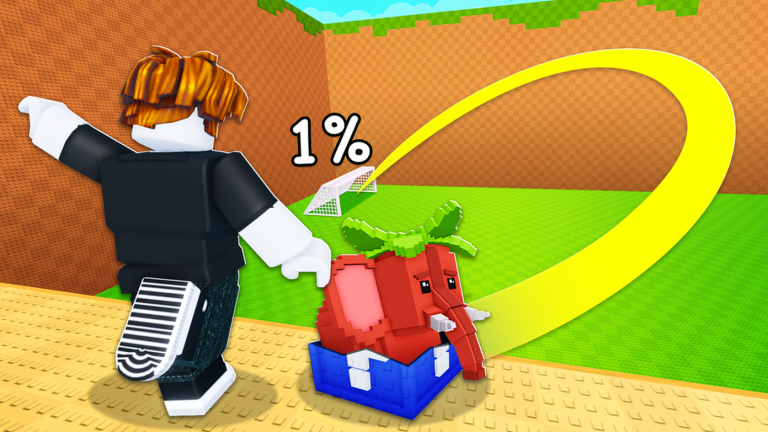
First 5 minutes checklist
Run this checklist on every fresh account or whenever you bring a friend in. The goal in the first five minutes is to learn the loop, not to maximise income — that comes later.
- Walk to your plot and confirm the Lucky Block is spawned.
- Click to kick the Lucky Block once. Watch where it lands.
- Run back home before the tsunami catches you.
- Claim the rolled Brainrot and place it on your plot.
- Repeat steps 2-4 twice more without buying anything.
- Open the Run Speed shop and buy the cheapest first level — this is the single best early purchase you can make.
Your first kicks
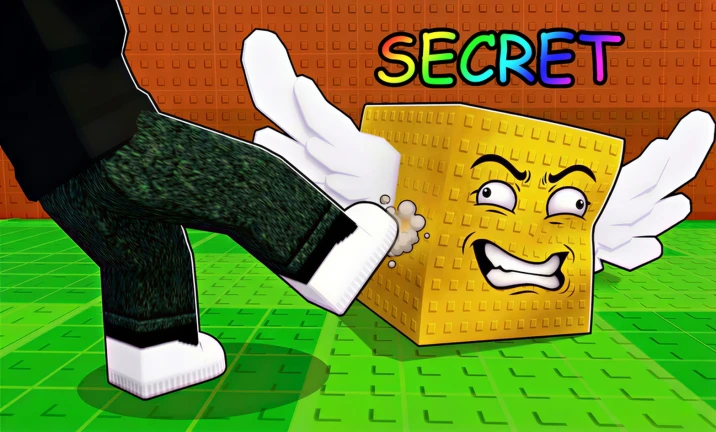
On spawn, head to your plot. The Lucky Block is already there — interact with it to kick. Your starting Kick Power is low (the free Wooden Stick weight gives you +2 Kick Power), so the block will only reach the Common or Rare zone. That is fine. Your goal in the first ten minutes is volume, not rarity:
- Kick, run back, place — fast.
- Do not buy anything yet — let the income build for two or three rolls.
- Learn the path back to your plot before the tsunami pressure ramps up.
First 30 minutes checklist
Once the loop feels natural, expand the goal to "unlock the next zone, claim your first uncommon-or-better Brainrot, and stack one mutation". Roughly:
- Save up for the Bone Barbell ($7.5K) so your kicks reach the next zone tier.
- Buy your first cosmetic Brainrot upgrade only after weights are paid for.
- Claim your first uncommon-or-better Brainrot and place it in a prominent plot slot.
- Watch for a global luck event in chat — when one fires, drop everything and spam kicks for the full window.
- Take a Run Speed level whenever the cost is similar to one full Brainrot's earnings.
- Read the weights table so you know which weight tier is next; sitting on idle cash is the slowest mistake new players make.
Surviving the tsunami
The tsunami is on a timer. Kicking the block triggers it, and it homes in on the spot the block landed. If you are not back on your plot before it catches you, you lose the Brainrot you rolled.
The two levers you have on the survive phase are Run Speed and route. Run Speed lives in a separate upgrade shop and we recommend buying at least one cheap Run Speed level early — the cost-to-impact ratio at low levels is excellent and it stops you losing your first big Brainrot to a stray wave.
Placing brainrots
When you arrive home with a claimed Brainrot, you place it on your plot. Each placed Brainrot generates passive income while you continue kicking. There is no hard cap reported in our sources, but plot space is finite — keep your plot focused on your highest-earning Brainrots and discard or replace the weak ones as you upgrade.
Buying weights
Weights raise your Kick Power and are the single most direct way to make progress. They are bought from the in-game Pro Lifter's Weight Shop. The confirmed price ladder runs: Wooden Stick (free, +2 KP) → Bone Barbell ($7.5K, +5 KP) → Stone Block ($75K, +10 KP) → Copper Plate ($500K, +50 KP) → Iron Plate ($7.2M, +150 KP) → Ice Barbell ($350M, +400 KP), continuing up to the Giant Gold Star Barbell at the very top end. Always buy the next available tier as soon as you can afford it; sitting on cash you could be spending on weights is the slowest mistake new players make.
See the weights & kick power guide for the full table.
Which weights to skip — and why Stone Block is the trap
Not every weight in the Pro Lifter's Weight Shop is worth buying in order. Pro Game Guides (verified May 2026) specifically flags the Stone Block ($75K, +10 Kick Power) as skippable — and the math backs this up. Here is the cost-per-Kick-Power breakdown for the early weight tiers:
| Weight | Cost | KP Gain | Cost per KP | Verdict |
|---|---|---|---|---|
| Wooden Stick | Free | +2 | — | Starter only |
| Bone Barbell | $7.5K | +5 | $1,500 / KP | Buy immediately |
| Stone Block | $75K | +10 | $7,500 / KP | Skip — 5× worse efficiency than Bone Barbell |
| Copper Plate | $500K | +50 | $10,000 / KP | Buy — the per-KP cost is higher but the raw +50 KP unlocks Legend zone |
The pattern: Stone Block costs 10× more than Bone Barbell but gives only 2× the Kick Power. Saving directly from Bone Barbell to Copper Plate ($500K → +50 KP) unlocks the Legend zone tier in one jump, which immediately raises your Brainrot quality and passive income. The 50 Kick Power from Copper Plate covers the $500K cost many times over in the Legend zone compared to grinding Epic with the Stone Block.
This skip strategy is confirmed by both Pro Game Guides and the FindingDulcinea beginner guide, which independently recommend going "Wooden Stick → Bone Barbell → Copper Plate" as the optimal early-game path. The skip only works for Stone Block — all later tiers should be bought in order because the Kick Power jumps are large enough to justify the cost at each step.
Chasing mutations
Every kick has a chance to roll a mutated Brainrot, with a multiplier on top of the base earnings. Eight mutation tiers are now documented: Gold (1.5×), Diamond (2×), Plasma (4×), Molten (6×), Radioactive (8×), Shadow (12×), Electrified (16×), and Rainbow (30×). Shadow, Electrified and Rainbow were added in and after Update 1 (April 27, 2026). Only one mutation can apply per Brainrot.
You boost your odds by:
- Performing perfect kicks (a small luck bonus per kick).
- Catching global luck events — they pop randomly and last roughly five minutes with a 2× / 4× / 8× server-wide boost.
- Buying the Mutation Luck gamepass for a permanent doubled chance (139 Robux).
The exact base mutation probability is not publicly documented; treat the existence of mutations as an upside, not as a plan. Note that these boosts multiply together rather than replace each other — a Perfect Kick during a 4× global luck event while you own Mutation Luck stacks all three multipliers on the same kick.
When to take your first rebirth
Your first rebirth unlocks at 1,000 Kick Power and grants a permanent 2× cash multiplier. Rebirths stack across runs, but they do not unlock new zones, items, or cosmetics — only a faster earnings curve.
Practical advice from sources we trust: do not rebirth as soon as you hit 1,000 Kick Power. First, push your kick distance into the next zone tier or two — that means your post-rebirth grind starts in a much higher-yield zone. The rebirth guide walks through the timing in detail.
If you would rather skip the requirement, the 99-Robux Rebirth Skip gamepass lets you rebirth without hitting 1,000 Kick Power.
Common early mistakes
Most of the friction we see in the first hour traces back to the same handful of mistakes. The list below is drawn from the FindingDulcinea beginner guide and our own playthroughs:
- Hoarding cash. Money idle in your wallet earns nothing — convert it into the next weight or Run Speed level. Plan your next two purchases before you even start your next kick.
- Skipping Run Speed entirely. Run Speed and weights work together — see the weights guide for how the two combine. Even one early Run Speed upgrade pays for itself by saving Brainrots from the tsunami.
- Chasing mutations from minute one. Mutations are an upside, not a plan. Stick to the loop and let global luck events do the heavy lifting.
- Buying cosmetic Brainrots before weights. A heavier weight unlocks a better Brainrot pool by itself; cosmetic upgrades on a low-tier Brainrot do not.
- Rebirthing too early. The 2x multiplier amplifies your current earnings; amplify a higher number, not your starter trickle.
- Trusting "code lists" elsewhere. No active codes exist as of May 2026 — see our codes page for why and what to expect.
When to think about your first rebirth
Your first rebirth unlocks at 1,000 Kick Power. The decision is not "have I crossed the line", it is "is the income I will lose worth the multiplier I will gain?" In practice, do not rebirth the moment you cross 1,000 KP — push your Kick Power until you can comfortably stay in the next zone tier or two, then rebirth. The 2x cash multiplier compounds with mutation multipliers (see the mutations stacking note), so a rebirth into a higher zone tier is dramatically more efficient than rebirthing the moment you can.
The mid-game shift — how the game changes after your first rebirth
Hitting 1,000 Kick Power and taking your first rebirth is the game's single biggest transition point. Your Kick Power resets to zero — you are back to the Wooden Stick and the lowest zones. But the permanent 2x cash multiplier changes the math of every subsequent kick. Brainrots you land now are worth twice as much passively as the same character would have earned pre-rebirth, and your income lets you buy the next weight tier faster than a new player ever could. You climb the ladder noticeably quicker than your first cycle.
The key mid-game adjustment is pace. After your first rebirth, the early zone grind through Common and Rare is much shorter than the first time — your Run Speed, which is not reset on rebirth per a Pro Game Guides source, keeps you safe while your Kick Power rebuilds, and the 2x multiplier means each kick is more productive sooner. In practice, you can push into Mythic and Godly zones in a fraction of the time it took on your first cycle.
Mid-game is also where mutation farming starts to matter. In your first cycle, catching a mutation is an upside — welcome but not the focus. By your second or third rebirth, you are regularly reaching zones where Radioactive mutations (8x) and above are plausible, and landing one on a Godly or Secret Brainrot produces a step-change in your passive income. That is when the Mutation Luck gamepass pays off, and when timing your kicks to global luck events becomes a deliberate strategy rather than a happy accident.
Plot management — keeping your island at peak passive output
Your plot generates income as long as Brainrots are placed on it. In the early game, place every claimed Brainrot immediately — any passive income beats an empty slot. The decision gets harder as your plot fills up in the mid-game: which Brainrots are worth keeping, and which earn so little relative to your current zone output that they should be replaced?
The general rule is to rank Brainrots by zone tier first, mutation multiplier second. A mutated Common Brainrot can outperform a non-mutated Rare — a Gold (1.5x) or Diamond (2x) mutation on the right character changes the comparison — but once you are regularly kicking into Legendary and above, the zone gap dominates the mutation gap. Start actively replacing the lowest-earning plot slot with each new Brainrot you claim, rather than keeping old placements by habit. The passive income curve accelerates quickly once you stop filling slots with early-session charity placements.
Global luck events — your highest-value window
Global luck events are server announcements that temporarily raise mutation odds for all players simultaneously. They typically run for around five minutes and multiply mutation chance by 2x, 4x, or 8x server-wide. When you see one fire in the server chat, it is the highest-value window in any session — everything else can wait.
What to do when one fires: go into rapid-fire kicks for the full event window. Do not spend the window buying weights or upgrading Run Speed — prepare your weight budget in advance so you are already at the best kick distance you can sustain before the event starts. Each kick during a 4x event has four times the normal mutation odds. If you own the Mutation Luck gamepass (2x, permanent), the multipliers stack — a 2x pass during a 4x event is an 8x total boost per kick. The Admin Abuse event in April 2026 was the first documented global event: a 300% global luck boost that ran for 53 hours across all servers. Future events are likely to follow a similar pattern.
Upgrade priority rules — the shortest path through the early game
Every cash decision in Kick a Lucky Block has an opportunity cost. These five rules encode the highest-impact priorities for new and returning players in order of importance:
- Run Speed first, always. Before your second kick in any session, buy at least one Run Speed level. Run Speed may not reset on rebirth (Pro Game Guides, single-source — treat as likely). A lost Brainrot to the tsunami costs more than any Run Speed level.
- Weights over everything else. The weight ladder is the primary progress system. Always buy the next weight tier as soon as you can afford it — never sit on cash you could spend on a weight.
- Zone before rebirth. The first rebirth unlocks at 1,000 Kick Power. Push into the next zone or two above the threshold before taking it — the 2x multiplier compounds better on a higher zone base.
- Gamepasses in the mid-game, not before. The Mutation Luck gamepass (139 Robux) doubles mutation odds. That boost is meaningful at Epic zone and above, where mutation rolls already have real value. At Common zone, you are doubling a tiny number.
- Cosmetics last. Cosmetic upgrades on a low-tier Brainrot do not raise your zone access. Weights do. Every cosmetic purchase before Iron Plate tier is a weight upgrade delayed.
Speed optimization — the stat most beginners ignore
Run Speed is the most underinvested stat in Kick a Lucky Block. Multiple independent guides (Pro Game Guides, FindingDulcinea, TechWiser) agree: players who neglect Speed lose their best Brainrot rolls to the tsunami and plateau at mid-game zones. The tsunami does not care about your Kick Power — if you cannot sprint back in time, the Brainrot is gone.
The confirmed mechanic that changes everything: Run Speed upgrades are NOT reset on rebirth (Pro Game Guides, May 2026). This makes Speed the only permanent stat investment in the game alongside rebirth multipliers. Every Speed level you buy is a permanent gain that carries through every future rebirth cycle, making each subsequent climb faster and safer.
Community-sourced Speed benchmarks per zone tier (compiled from ggwtb.com and AllThings.How guides, treated as approximate player estimates — not developer-confirmed thresholds):
| Zone tier | Approximate Speed needed | Notes |
|---|---|---|
| Common / Rare | Default (no upgrades) | Starter zones — tsunami is short and slow |
| Epic / Legend | 50–60 | First real Speed check; buy 2-3 levels before pushing here |
| Mythic / Godly | 70–75 | Tsunami becomes noticeably faster; one lost Godly Brainrot costs hours of income |
| Secret / Divine | 75–90 | Return distance is long — Speed investment is non-negotiable at this stage |
| Hacked / OG | 90–100+ | Endgame zones; Speed upgrades cost millions by this point but are mandatory |
| Celestial | 110+ | Top-tier zone; max Speed investment recommended before attempting |
These Speed numbers are community estimates aggregated from public guides, not developer-published data. Treat them as directional — your actual survival depends on timing, route, and server conditions as well as raw Speed. The important pattern is the upward slope: each zone tier demands a meaningful Speed investment to survive consistently.
Practical Speed investment rule: for every two weight tiers you buy, invest one level into Run Speed. This 2:1 ratio keeps your survival rate high enough that you are not leaking income to lost Brainrots, while still prioritising the weight ladder that unlocks better zones.
The Weather Machine — why you should stop selling every duplicate
The Weather Machine is a relatively recent addition to Kick a Lucky Block (first noted in community guides around May 2026). It introduces a new use for duplicate Brainrots that changes how you manage your collection.
The core mechanic: the Weather Machine lets you sacrifice duplicate Brainrots to activate temporary server-wide effects. The exact effects vary — community reports describe boosted mutation odds, increased earnings rates, and zone-tier bonuses — but the consistent rule across all sources is that duplicates now have value beyond their sell price. A duplicate Mythic or Godly Brainrot that you would previously have sold for cash can now be fed into the Weather Machine to trigger an event that benefits your entire collection.
Pro Game Guides (May 2026) explicitly warns against the old habit: "Don't sell every duplicate Brainrot before checking whether the Weather Machine needs it." The FindingDulcinea guide echoes this, noting that "weak duplicates" are best saved for Weather Machine events rather than liquidated for cash. The strategic shift is straightforward:
- Keep high-rarity duplicates (Mythic and above) — they are the most valuable Weather Machine fuel.
- Use Common and Rare duplicates as disposable event triggers — they are cheap to replace and activate the machine at low cost.
- Never sacrifice your best earners. The Weather Machine takes duplicates only — your single highest-earning copy of each Brainrot should stay on your plot generating income.
- Check the machine before each selling session. If an event is active or about to fire, holding duplicates for a few more minutes can multiply their value significantly.
This mechanic is documented across multiple third-party guides but has not been confirmed by an official developer source. The specific event types, durations, and sacrifice costs are community-observed and may change between updates. Treat the Weather Machine as a confirmed feature with evolving mechanics rather than a fully mapped system.
AFK training and offline earnings — passive income beyond active play
Kick a Lucky Block generates income even when you are not actively kicking. Two passive systems work in parallel, and understanding both is the difference between a slow grind and steady progression.
AFK weight training
While you are in the game, your character can continue training with whatever weight is currently equipped even if you step away from the keyboard. FindingDulcinea's beginner guide recommends setting up "in a safe corner with your weights" and letting your character train while you are idle. This means you accumulate Kick Power passively during any stretch where you are in the game but not actively playing — eating, watching a video, or switching to another window. The key limitation: AFK training only works while the game is running and you are connected to a server. Log out or disconnect, and the training stops.
Offline Brainrot earnings
Your placed Brainrots continue generating cash while you are offline, up to a daily earnings cap. Pro Game Guides confirms that Brainrots "can generate cash while you are offline, up to the game's offline earnings cap." The cap is based on your collection — more and rarer Brainrots raise the ceiling — which means improving your plot before logging off directly increases what you collect when you return.
Practical routine for maximising passive income:
- Before logging off: replace your weakest plot Brainrots with the best ones in your inventory. The offline cap scales with collection quality, not quantity — ten Common Brainrots earn less than two Godly ones.
- During long AFK sessions: equip your heaviest weight and park in a safe spot. Even slow Kick Power accumulation adds up over hours.
- On login: collect your offline earnings first (step on the green pad at your base), then immediately invest the cash into the next weight tier before starting your kick cycle. Cash sitting in your wallet after collection is cash not compounding.
If you only watch one video first
We have linked the full creator round-up on the wiki hub. If you only have time for one before your first session, this VIP-pass rundown explains the early upgrade order and demonstrates the kick-tsunami-claim loop in real time.

Kick a Lucky Block Beginner Guide — FAQ
What should I buy first in Kick a Lucky Block?
Buy at least one Run Speed upgrade before your second or third kick. Run Speed prevents you from losing Brainrots to the tsunami, which is the most punishing early-game mistake. After that, immediately prioritise the next weight tier (Bone Barbell at $7.5K) over cosmetics or anything else.
How does the tsunami work in Kick a Lucky Block?
When you kick the Lucky Block, a tsunami spawns at the spot where the block lands and chases you back toward your plot. If you reach your plot before the wave catches you, you claim the Brainrot the kick rolled. If the wave reaches you first, you lose that roll. Run Speed and knowing your route back are the two things you can control.
When should I take my first rebirth?
The first rebirth unlocks at 1,000 Kick Power and grants a permanent 2× cash multiplier. Do not rebirth the moment you hit that threshold — push your Kick Power high enough to comfortably stay in the next one or two zone tiers, then rebirth. The 2× multiplier is worth more applied to a higher-tier zone income than to your starting trickle.
How do I get rarer Brainrots?
Rarer Brainrots come from farther zones. Zone access depends on your Kick Power, which comes from buying heavier weights. There is no shortcut: buy every next weight tier as soon as you can afford it, and your Brainrot quality will improve automatically. The zones guide lists which zone each Kick Power tier reaches.
What is the fastest way to earn money in Kick a Lucky Block?
Stack as many income multipliers as possible in this order: (1) place high-rarity or mutated Brainrots on your plot for passive income; (2) upgrade weights to unlock rarer zones and better Brainrots; (3) stack Rebirth multipliers once you hit 1,000 Kick Power; (4) time kicks around global luck events for mutation chances. Avoid sitting on idle cash — every second it is not spent on the next weight is slowing your curve.
Should a beginner buy the Mutation Luck gamepass?
Not as your first purchase. In the early game, your Kick Power is too low to reach the zones where high-tier mutations appear frequently. The Mutation Luck gamepass (139 Robux) doubles your mutation chance, but doubling a very small number is still a small number. Invest in weights and Run Speed first; revisit the gamepass once you are regularly reaching Epic or Legendary zones.
Does Run Speed reset when I rebirth?
According to Pro Game Guides (a single-source claim not yet cross-confirmed), Run Speed does not reset on rebirth — unlike Kick Power, which resets to zero. If accurate, every Run Speed level you buy is a permanent upgrade that carries forward through all rebirth cycles, not a per-cycle cost. Treat it as likely but not guaranteed until a second independent source confirms it.
What should I do when a global luck event fires?
Stop whatever you are doing and go into rapid-fire kicks for the full event window (typically around five minutes). Global luck events multiply server-wide mutation odds by 2x, 4x, or 8x — whichever tier the event announces. If you own the Mutation Luck gamepass, the 2x from the pass stacks multiplicatively with the event multiplier. Prepare your weight budget before the event so you are already at the highest kick distance you can sustain when it fires — spending the window buying weights is mutation-farming time lost.
What should I do with my plot as I progress?
In the early game, place every claimed Brainrot immediately — any passive income is better than none. Once you fill your plot in the mid-game, start actively replacing the lowest-earning slot each kick cycle. Zone tier is the primary ranking factor: a higher-zone Brainrot almost always earns more than a lower-zone one regardless of mutation. Mutated Brainrots of the same zone tier outperform their non-mutated equivalents — prioritise keeping your best mutation per slot.
Is there a Kick a Lucky Block Trello or developer Discord?
No verified developer Trello, Discord, YouTube, X, Instagram, or TikTok account has been documented for Kick a Lucky Block as of May 2026. The Discord at discord.gg/kickaluckyblock is a fan community server, not developer-run, and explicitly states this in its #news channel. The developer (No More Flops) has not published a first-party communication channel. See our official links page for the full verified status of every social channel.